
SCIENTIFIC ESSAY
Why Europe’s phytopharmaceutical industry continues to conduct research yet struggles to turn it into new herbal medicinal products – and the opportunity that lies in this bottleneck
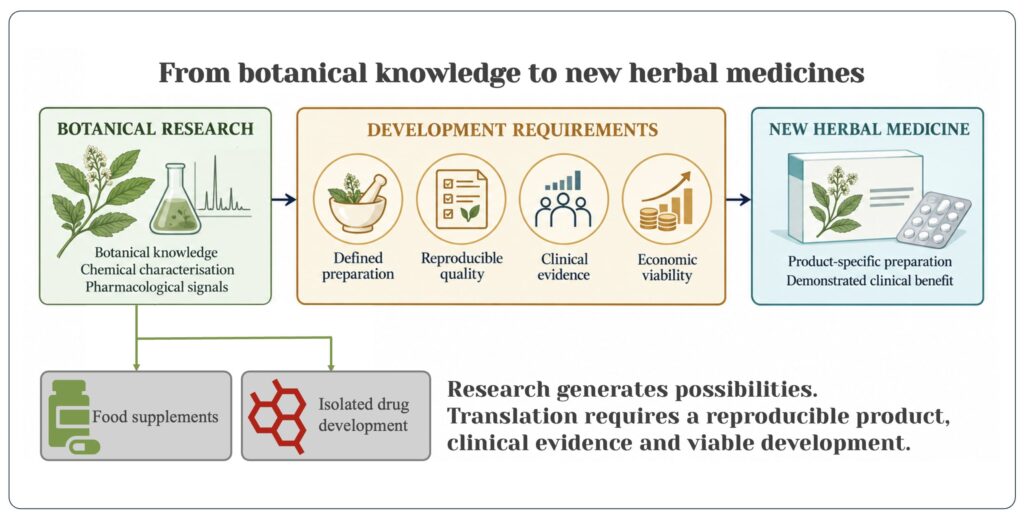
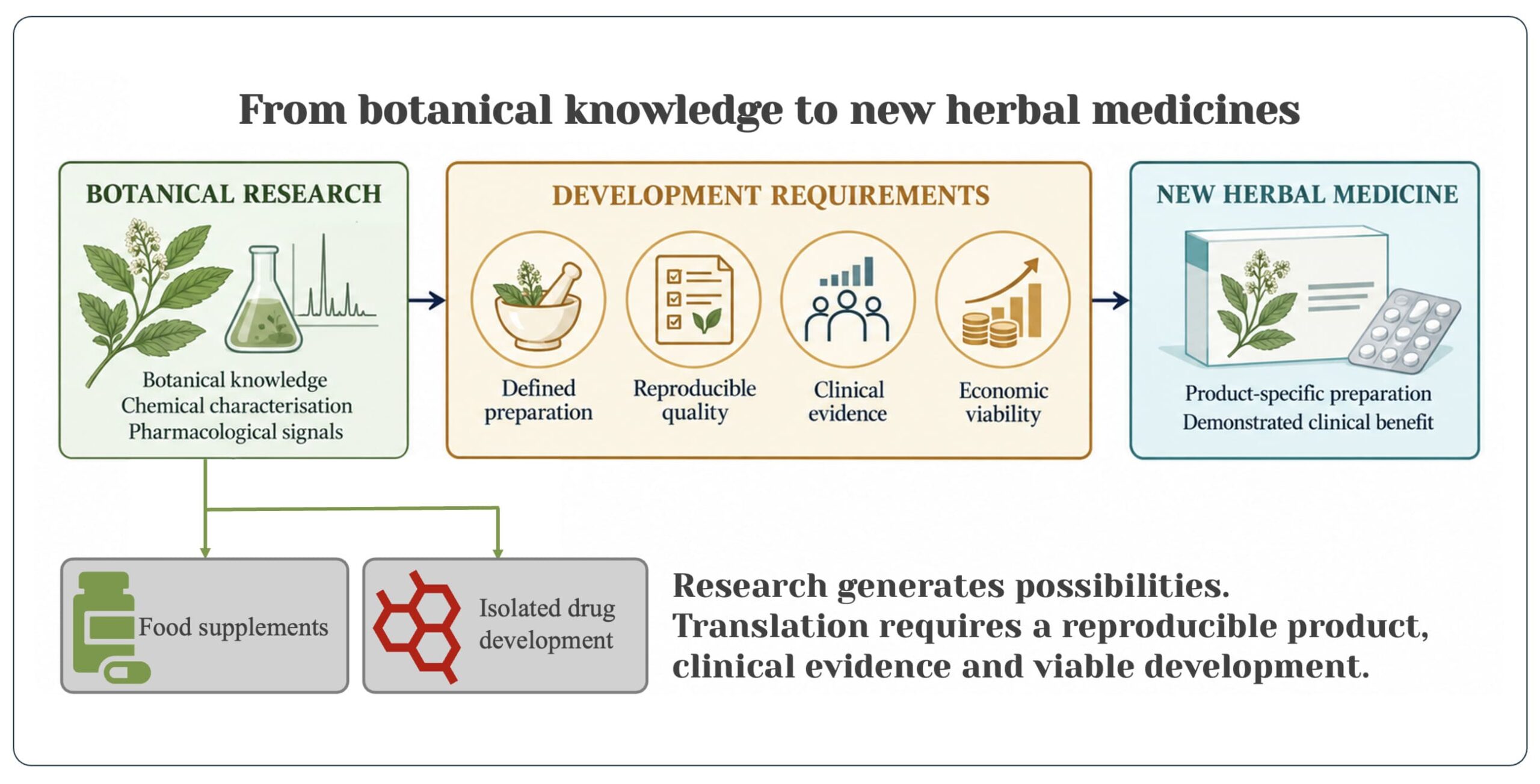
A shelf full of herbal products can look like medical progress. But a new brand, package or capsule does not necessarily represent a new treatment. This Scientific Essay asks what stands between a promising discovery about a medicinal plant and a new medicine with demonstrated benefit for patients.
Drawing on observations from a medicinal plant research congress in Reims, published studies and examples of approved medicines, the essay examines a practical dilemma. Developing a particular extract requires investment in reliable manufacturing, safety testing and evidence that it works. Yet other products bearing the same plant name may benefit from the reputation that research creates. If the developer cannot recover that investment, a promising preparation may never reach patients.
The distinction matters because the plant is not the same as the product. Preparations made from the same species can differ in composition, dose and effects. Evidence for one therefore cannot automatically establish the benefit of another. The essay explores how clearer recognition of the preparation actually tested, consistent quality and shared development resources could help turn botanical knowledge into new treatments.
Its outlook remains a reasoned scenario, not a measured market forecast. Few new medicines, disappearing products and lost treatment options are different problems requiring different evidence. The central question is whether Europe can make the development of new herbal medicines scientifically convincing, practically achievable and economically worthwhile.