

RESEARCH COMMENTARY
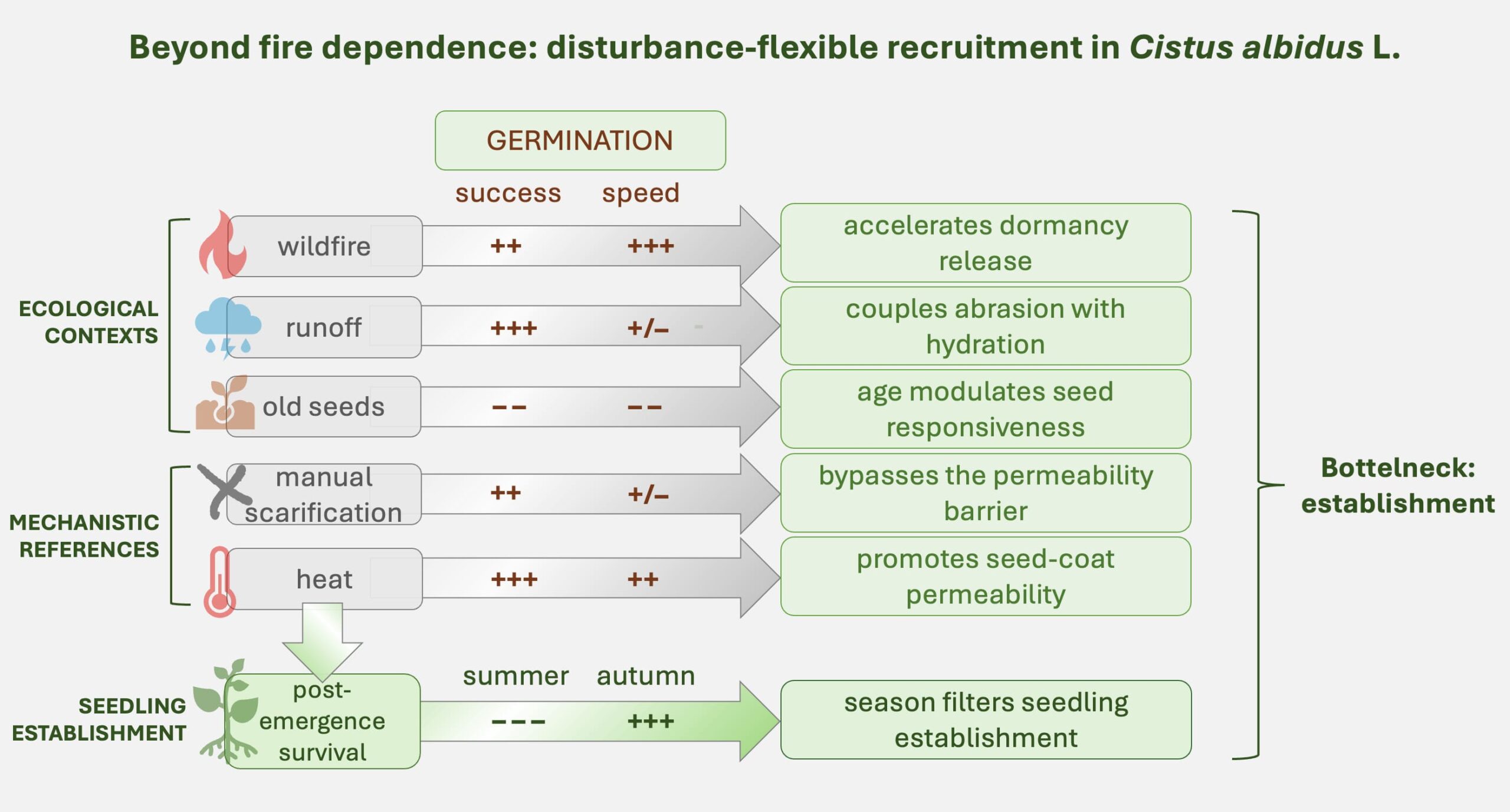
Cistus albidus L., a widespread shrub of the western Mediterranean, is commonly understood through its relationship with fire. Heat can break the physical dormancy imposed by its hard seed coat. Experimental work now shows that sediment-laden runoff may produce germination in the same range as heat-related treatments. Water carrying gravel and sediment can abrade the seed coat, providing another pathway through which seeds may begin to germinate. Rather than diminishing the role of fire, these findings suggest that fire and runoff may act as complementary ecological filters under different environmental circumstances.
But opening the seed coat is only the first threshold in regeneration. Germination can be triggered by heat, abrasion or prolonged hydration, yet the emerging seedling must survive the conditions that follow. In this study, seedlings emerging in summer suffered near-complete mortality, whereas autumn cohorts survived well. A mechanism that successfully releases a seed from dormancy may therefore still contribute little to plant recruitment if it acts at the wrong time of year.
The ecological story of C. albidus is not simply about how its seeds open. It is about when they open—and whether the season allows the resulting seedlings to survive.