
CONCEPTUAL PAPER
On Technological Self-Binding and the Freedom to Revise Decisions
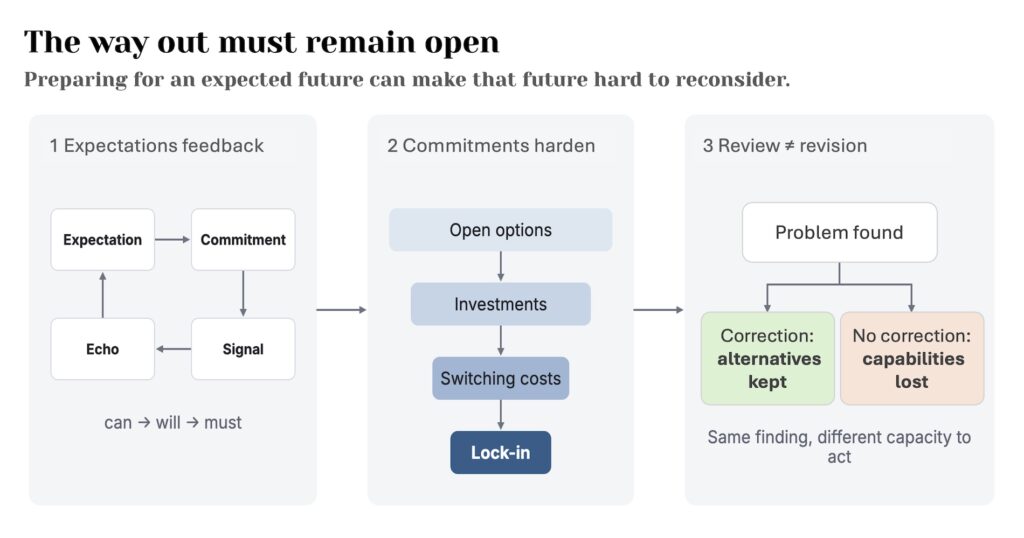
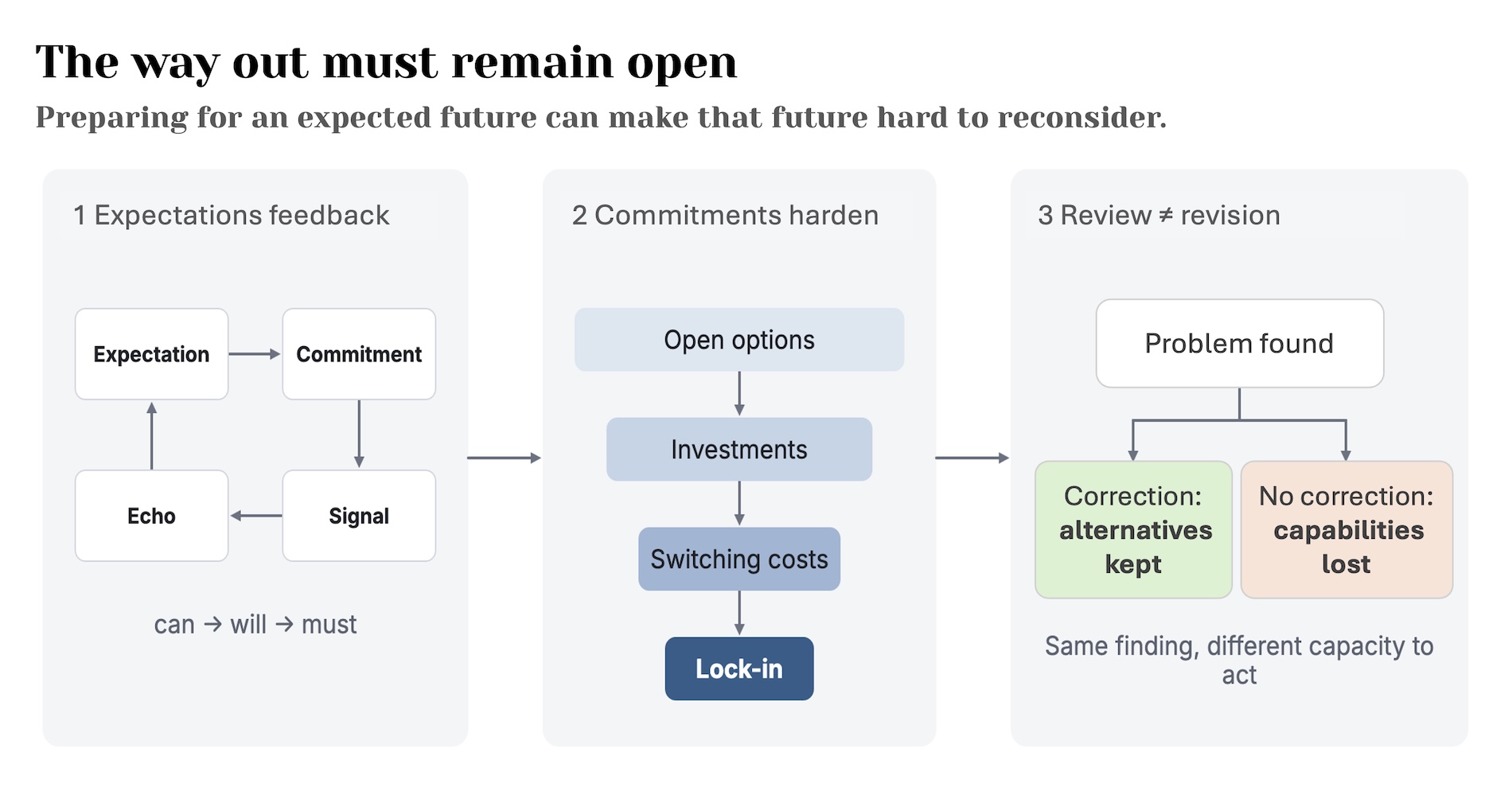
“There is no way around artificial intelligence.” Is this a prediction—or a claim that helps make itself true? People learn new skills, employers change requirements and universities reshape courses in anticipation of what others will demand. Each decision may be reasonable. Together, however, they can create dependencies that make alternatives harder to pursue.
This Conceptual Paper asks what societies risk losing when preparing for a technological future makes that future harder to reconsider. It connects research on expectations, technological dependencies and responsible innovation. Hypothetical examples show how AI adoption could produce this effect; they do not establish how widespread it is. The essay draws on published research and reports no new empirical data.
The problem is not simply whether people can think for themselves, but whether their judgements can still change anything. An organisation may recognise that a system is unsuitable for some tasks yet lack the skills, tools or procedures needed to limit, modify or stop using it. A decision can remain open to criticism while becoming practically closed to correction.
Shared technologies can enable cooperation, and preserving alternatives costs resources. Not every commitment must remain reversible. But the loss of meaningful opportunities for correction requires justification that considers who benefits, who is constrained and whether less restrictive alternatives could serve the same purpose. The aim is not to reject technology or restore an unchanged past. It is to preserve the conditions under which later learning can still change the course we have chosen.