

SCIENTIFIC ESSAY
Plant compounds such as caffeine, nicotine and morphine did not evolve as medicines, yet they can alter human perception, arousal and behaviour through identifiable biological targets. This Scientific Essay examines that apparent paradox without reducing it to either molecular affinity or presumed evolutionary adaptation.
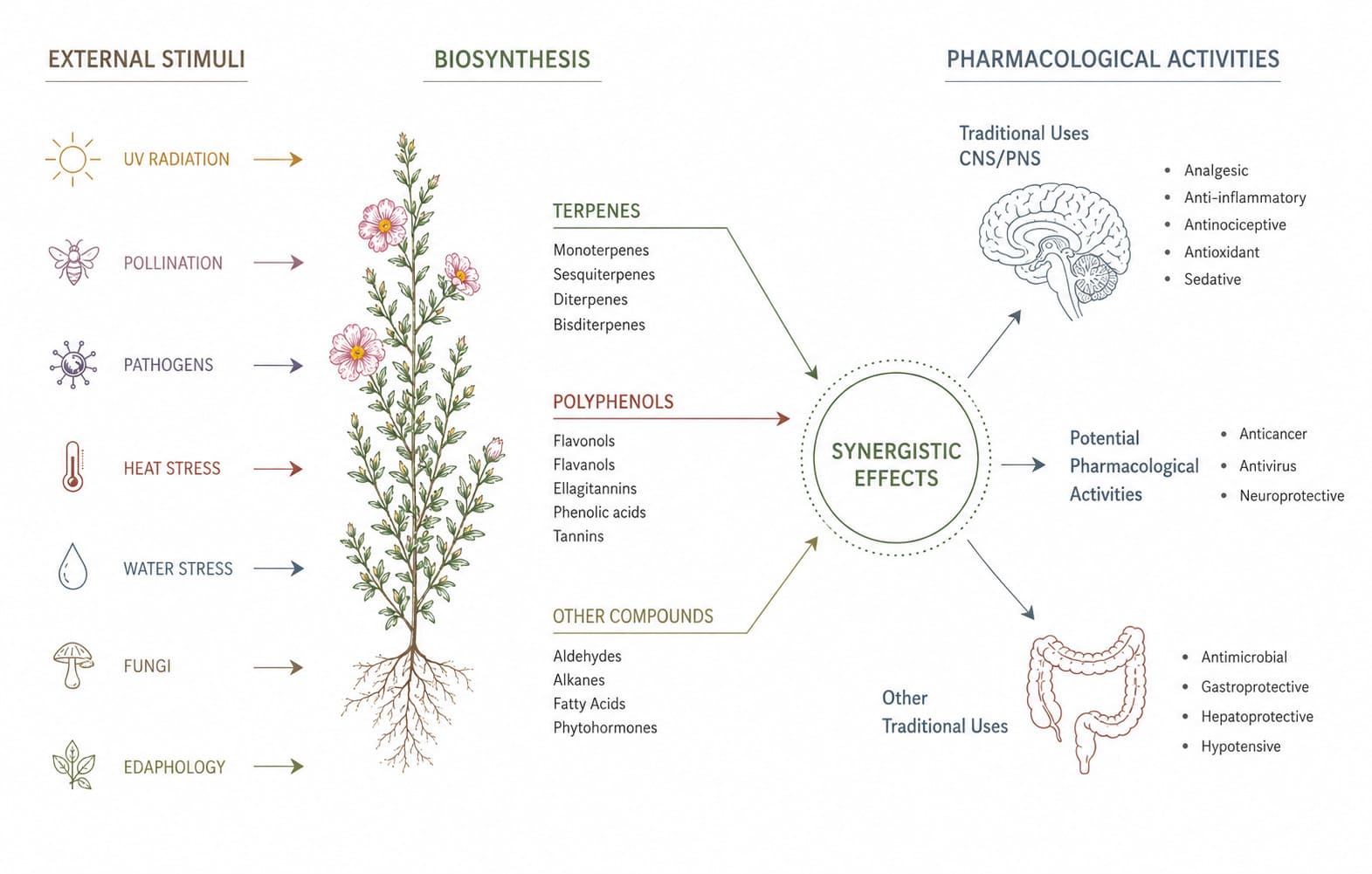
It proposes a relational framework connecting five analytically distinct levels: plant chemical ecology, evolutionarily conserved human response systems, cultural selection and preparation, the material organisation of extracts, and the recipient’s neurobiological state. Within this framework, medicinal activity is not treated as an intrinsic property of a plant species alone, but as a possible outcome of historically formed interactions among variable plant materials, constructed preparations and living systems.
The central implication is that the same plant is not necessarily the same intervention. Ecological history, preparation and recipient state may each alter biological exposure and response, making neuroactive phytopharmacology a problem of relationships as much as molecules.